Top 7 Causes of Commercial Truck Roadside Breakdowns in the Southeast
Few things derail a delivery schedule faster than a loaded truck sitting on the shoulder of I-85 with its hazards flashing. Across the Southeast, long summers, heavy humidity, stop-and-go freight corridors, and sudden storms push commercial diesel trucks harder than many fleet managers realize.
The good news is that most roadside failures don’t come out of nowhere. They build slowly, and they usually trace back to a handful of familiar culprits. The need for people who can fix them is growing, too.
Employment of diesel service technicians and mechanics is expected to climb about 4% between 2025 and 2035, according to the U.S. Bureau of Labor Statistics, which shows how much the trucking industry relies on skilled hands. Here are the seven most common reasons trucks end up stranded in our region, along with a few ways to keep yours moving.
1. Failing Coolant Parts Cooking the Engine
Southeastern heat is hard on cooling systems. When temperatures hover in the mid-90s, and a loaded truck crawls through Atlanta traffic, a weak water pump, a cracked hose, or a clogged radiator can send the temperature gauge into the red within minutes. Low coolant, worn belts, and failing fan clutches are the usual suspects. Hoses and clamps deserve special attention, since rubber breaks down quickly in constant heat.
Ignoring these parts risks warped heads or a blown head gasket, which turns a simple repair into an engine rebuild. Check coolant levels and hose condition before every long haul. If a truck does overheat on the road, mobile diesel mechanics can often replace a hose, belt, or thermostat right on the shoulder, which protects the engine from further damage.
2. Dirty Fuel Starving the Injectors
Humidity doesn’t just make the air feel heavy. It also encourages water to condense inside fuel tanks. Water, algae, and sediment slip past tired filters and clog injectors, leaving a truck sputtering, losing power, or refusing to start at all. Fleets that let trucks sit unused for days are especially vulnerable, since stale fuel breaks down and fouls the system. A clogged filter or a failing lift pump can strand a driver without warning.
Changing fuel filters on schedule, draining water separators, and buying fuel from busy, reputable stops all go a long way. When a truck does die from bad fuel, mobile diesel mechanics can drain contaminated lines, swap filters, and prime the system on site, so you don’t pay for a tow to a shop that might be hours away.
3. Worn Batteries Draining the Power
Heat shortens battery life far faster than most people expect, and the Southeast gives batteries a workout nearly year-round. Corroded terminals, loose cables, and aging alternators quietly drain power until a truck refuses to crank at a truck stop or a loading dock. Vibration from rough roads can loosen connections that looked fine at the last inspection.
Modern trucks also lean on electronics for everything from engine control to emissions monitoring, so a weak charging system can trigger a cascade of confusing warning lights. Test batteries every few months, clean the terminals, and replace anything that’s near the end of its rated life. If you do get stranded with a dead battery or a failed alternator, mobile diesel mechanics can test the system, swap the parts, and have you rolling again without a tow.
4. Damaged Tires Shredding on the Highway
Tire trouble remains one of the most common reasons trucks end up on the shoulder. Hot pavement raises tire temperature, and underinflated tires flex more, build even more heat, and eventually fail. Mismatched or uneven tires on dual axles wear faster and add to the risk. Southeast drivers also deal with sudden downpours, construction zones full of debris, and rough patches of highway that punish sidewalls.
A blowout can damage fenders, air lines, and wiring, so the repair bill often grows well past the tire itself. Check pressure with a gauge each morning, inspect treads and sidewalls, and rotate tires on schedule. When one does give out, mobile diesel mechanics can repair or replace it where you stopped, which keeps your cargo moving and your driver safer than waiting for a distant tow.
5. Neglected Brakes Fading Under Load
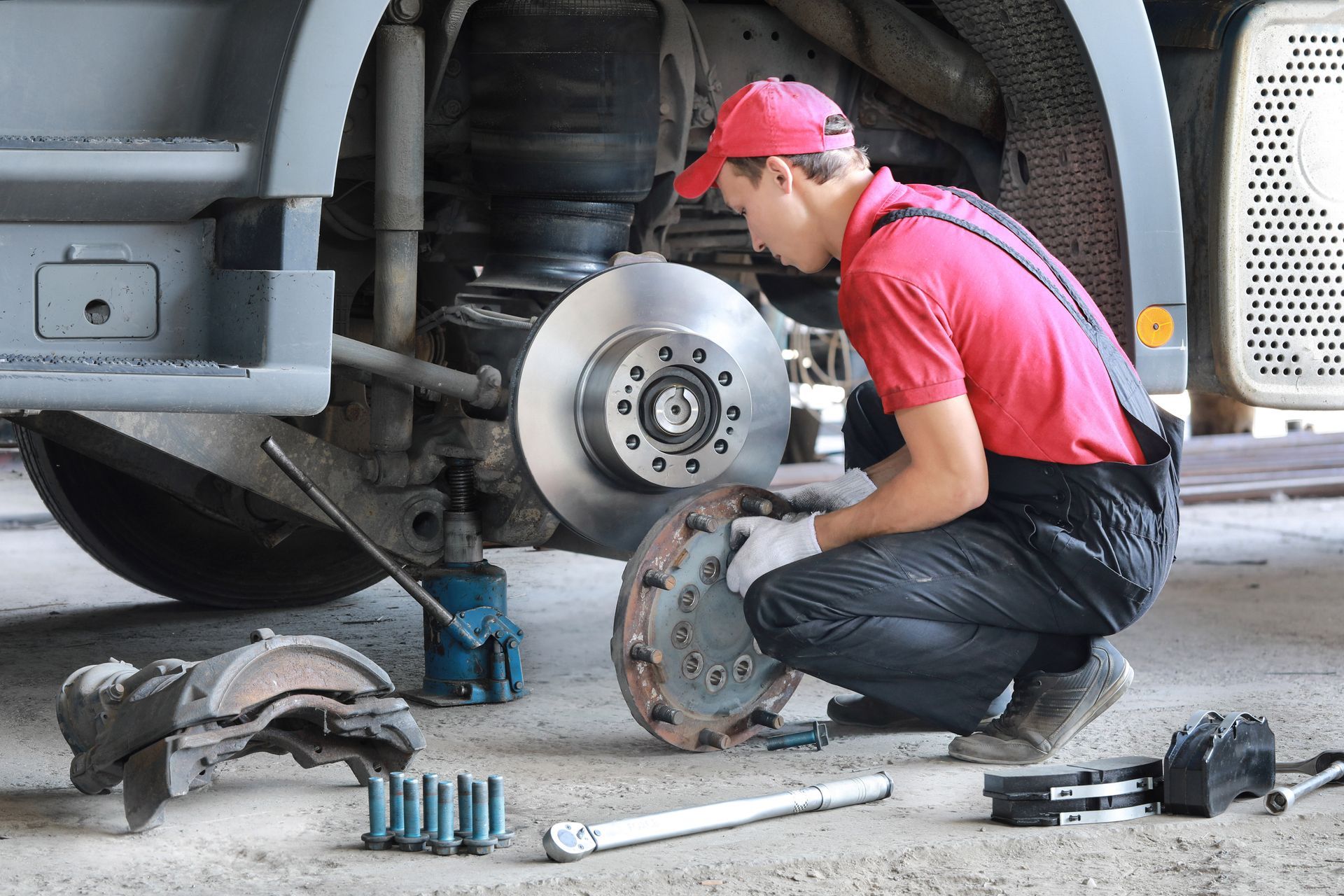
Hilly stretches through North Georgia, Tennessee, and the Carolinas ask a lot of commercial brakes. Constant downhill braking under heavy weight overheats drums and linings, and worn components fade just when a driver needs them most. Air brake systems add another layer of risk, because leaking lines, bad slack adjusters, or moisture in the air tanks can trigger a roadside shutdown or a failed inspection.
Brake problems also tend to get worse quickly, so waiting for the next scheduled service rarely pays off. Inspect brake linings, listen for grinding, and drain air tanks regularly to keep moisture from building up. Should a problem surface during a run, mobile diesel mechanics can adjust, repair, or replace many brake components at the roadside, so you can get moving again safely and legally.
6. Clogged Filters Forcing Emissions Derates
Modern diesel emissions equipment is a leading source of unexpected breakdowns. Particulate filters clog, sensors fail, and EGR valves stick, particularly on trucks that idle often or run short routes around busy metro areas. Low or contaminated diesel exhaust fluid can also trigger a derate that slashes power and limits speed to a crawl. Many drivers push through warning lights hoping the problem will clear itself, and that gamble often ends with a truck that won’t move at all.
Skipping regular maintenance on these parts can cost far more than the service itself. Use quality fluid, schedule regular regenerations, and scan for fault codes early. For roadside derates, mobile diesel mechanics carry diagnostic tools that can pinpoint the fault, fix the cause, and restore full power on the spot.
7. Tired Transmissions Slipping Out of Gear
Transmissions and drivelines work hard in heavy Southeastern freight, and they rarely fail without warning. Low or burnt fluid, worn clutches, failing U-joints, and leaking seals cause slipping, harsh shifts, or grinding noises that drivers sometimes chalk up to quirks. Heat accelerates fluid breakdown, so the region’s long summers shorten service intervals more than many fleets assume. Left alone, those symptoms can end in a complete loss of drive, and a stranded truck with a failed transmission often needs major repair.
Change fluid at the recommended intervals, inspect driveline components during every service, and report odd noises or vibrations right away. For minor driveline and linkage issues, mobile diesel mechanics can often complete the repair on the spot, and they can also confirm whether a heavier job needs a full shop.
Keeping Your Fleet Rolling
Roadside breakdowns cost fleets money in lost loads, tow bills, and frustrated customers, but most of them are preventable. Cooling, fuel, electrical, tire, brake, emissions, and drivetrain problems all give early warnings, and a consistent inspection routine catches many of them before they strand a driver.
When something does go wrong, fast help matters just as much as a good repair. That’s why having a relationship with experienced mobile diesel mechanics, backed by a full-service shop, can save hours of downtime. Don’t wait for a warning light to turn into a breakdown; call today to schedule service or request roadside help from AFS Diesel Truck & Body.







Share On: